Narwhal vs beluga: how to tell them apart

See all narwhal pictures & images →
Narwhals and belugas stand as the only two living members of the family Monodontidae, making them each other's closest living relatives in the cetacean world. Both are mid-sized Arctic toothed whales that share several anatomical features: rounded foreheads, the absence of a dorsal fin, and a stocky body plan that reflects their adaptation to ice-filled polar seas. Despite these similarities, the two species are relatively easy to distinguish in the field once their key differences are understood.
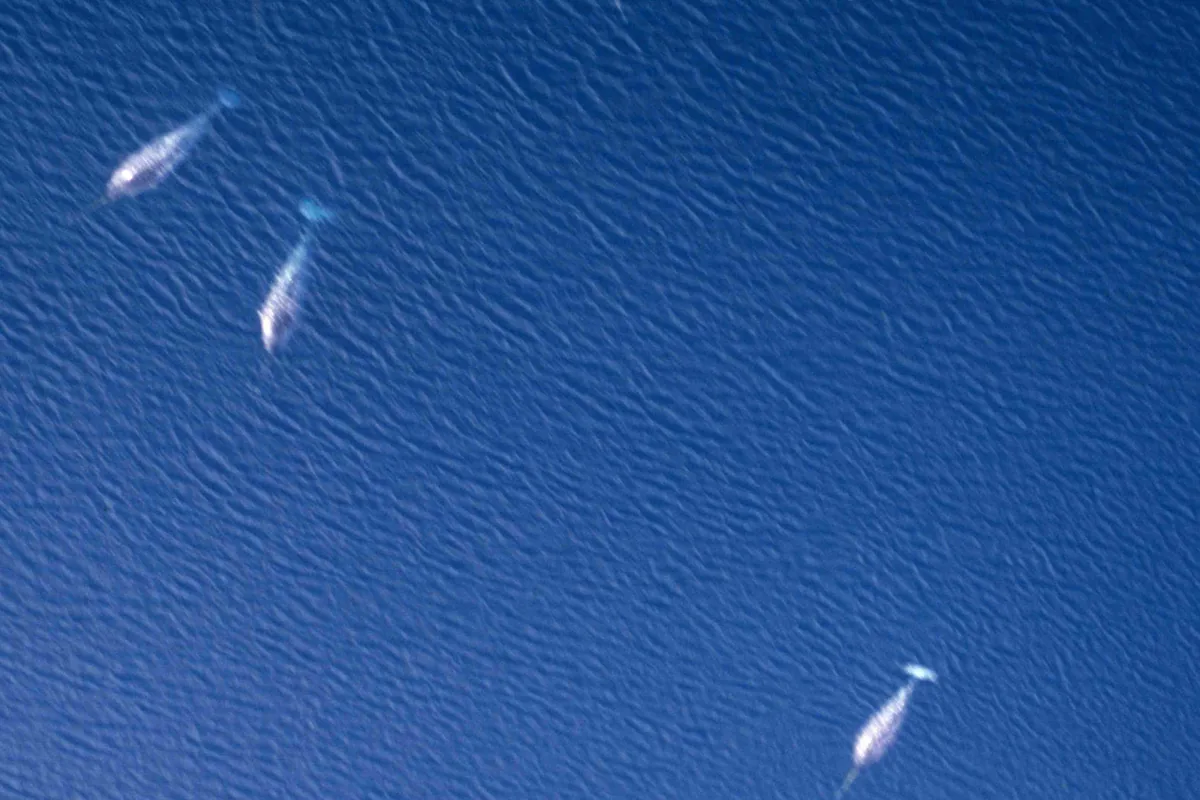
The most obvious visual difference lies in coloration and dentition. Adult belugas are pure white, while narwhals display a mottled grey-and-white patterning that intensifies with age. The most striking distinction is the long, spiral tusk protruding from the head of male narwhals—a feature entirely absent in belugas, which lack external tusks altogether. Beyond appearance, behavioral and anatomical differences set them apart. Belugas possess a notably flexible neck and produce an extraordinarily wide repertoire of vocalizations, earning them the nickname "sea canary." Narwhals, by contrast, are more specialized deep divers with greater dependence on heavy pack ice throughout the year.
In regions where their Arctic ranges overlap, narwhals and belugas have been documented to interbreed, demonstrating their close genetic relationship. Understanding these distinguishing characteristics—color, tusk presence, neck flexibility, and diving depth—allows observers and researchers to reliably identify each species in Arctic waters.
Sources: NOAA Fisheries — Narwhal; NOAA Fisheries — Beluga Whale. Educational information only. See our sources & fact-check policy.
Frequently asked questions
Relationship of the narwhal vs beluga: how to tell them apart?
Closest relatives (family Monodontidae)
Color of the narwhal vs beluga: how to tell them apart?
Beluga: white; Narwhal: mottled grey
Tusk of the narwhal vs beluga: how to tell them apart?
Beluga: none; Narwhal: males have one
More in Narwhal
Explore more Arctic wildlife
Compare the narwhal with the beluga, bowhead, orca, walrus, and polar bear in our quick-facts table.
Compare Arctic species →